Maasai Mara
Right to Sight in Maasai Mara
The Maasai are the most well-known ethnic group in Kenya, numbering around 1.3 million people. The Maasai Mara area is located in Narok County and is a tourist magnet where many Norwegians have been on safari. There, they have experienced stunning scenery, fantastic wildlife, the local population’s traditional way of life, their colorful clothing and jewelry, spectacular jumping dances, and their friendly and cheerful presence.
What not everyone knows is that many Maasai live in extreme poverty, and much of the adult population is illiterate. They have very limited access to healthcare services. Life expectancy is lower than elsewhere in the country, and child mortality is higher. Furthermore, eye diseases account for 4% of all deaths.
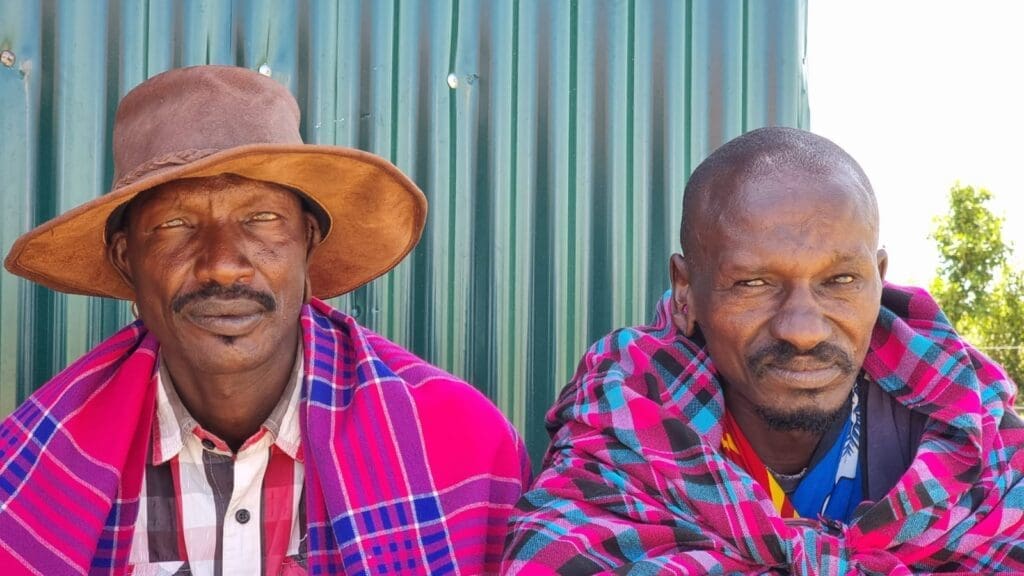
Screening Camp
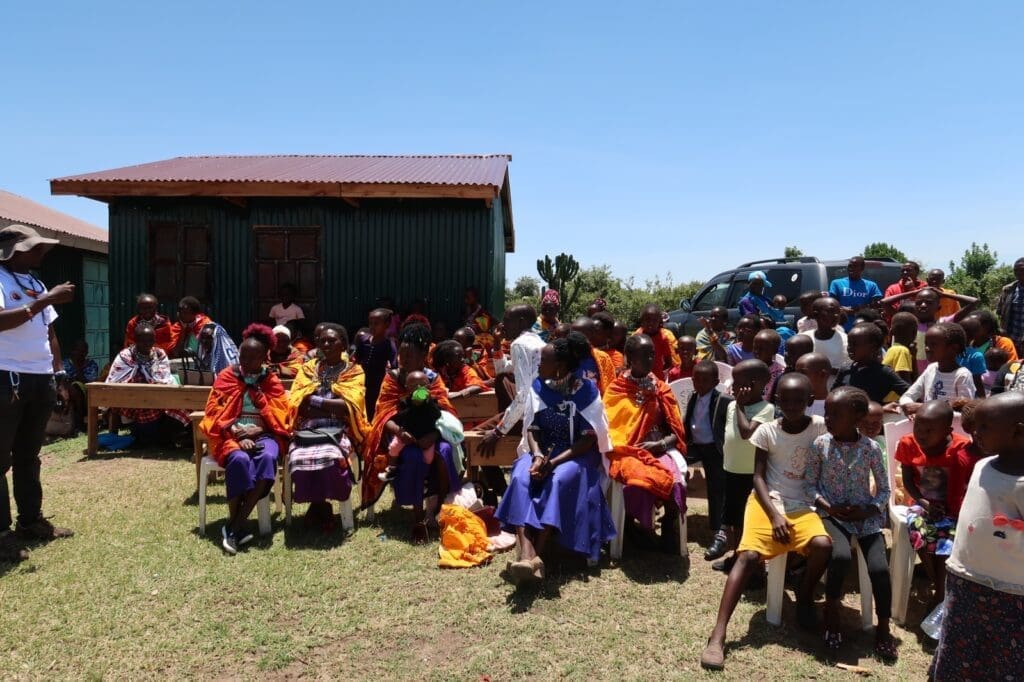
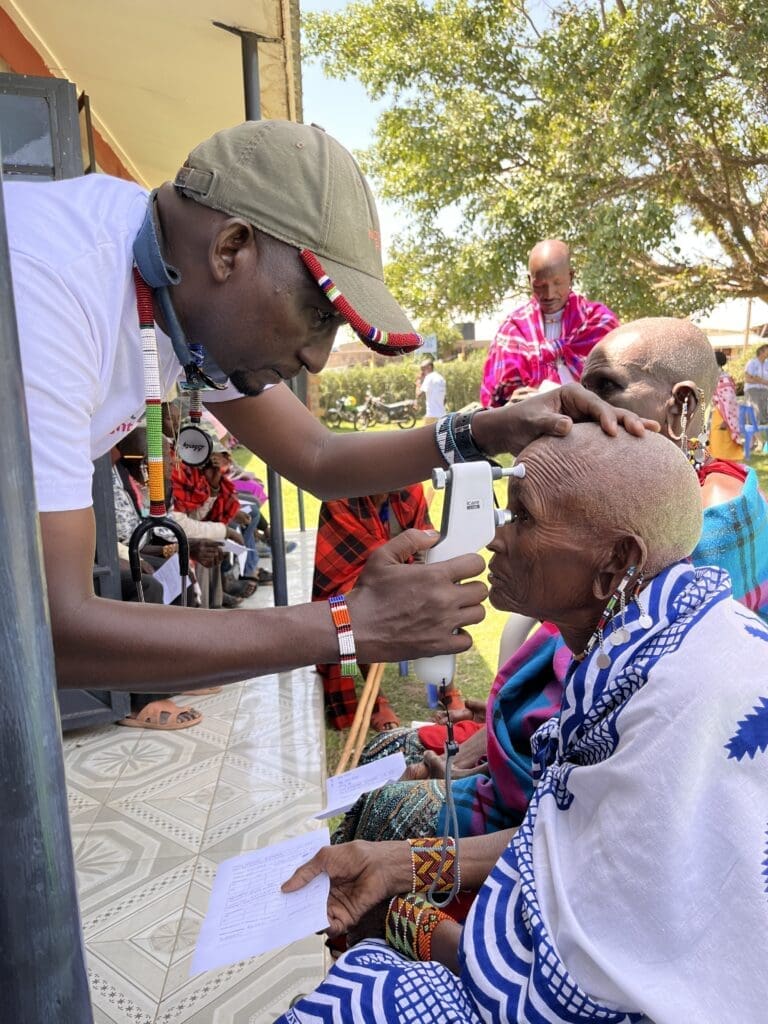
Right to Sight has long wished to establish a project in the Maasai Mara, but for various reasons, had not been able to realize it. In the autumn of 2022, an opportunity arose when we made contact with a local nurse running a small health clinic in Talek. He could serve as a door opener to the Maasai community. In March and April 2023, we conducted a large screening camp followed by a surgical camp.
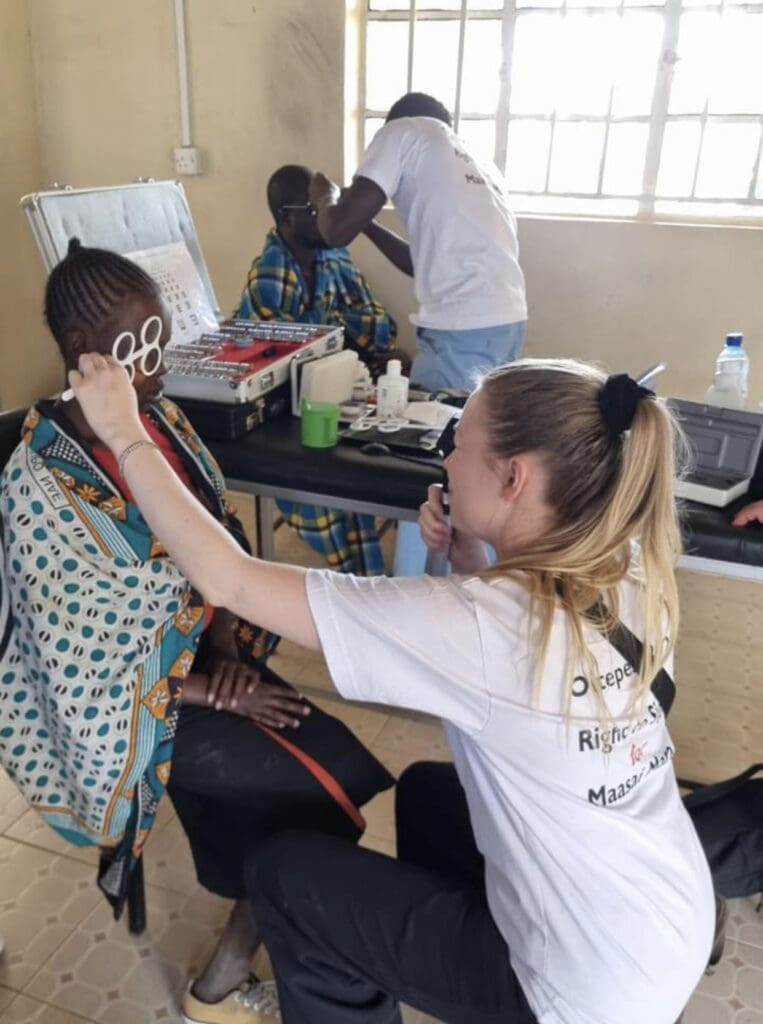
Right to Sight’s core model is the education and advanced training of local eye health personnel. To achieve this in this project as well, we brought along three Kenyan optometry students from MMUST university and three Norwegian optometry students from the University of South-Eastern Norway who were on exchange in Kenya. By participating in such a screening, they would gain extensive practice in eye examinations. The students were accompanied by a teacher from MMUST.
The rest of the screening team consisted of Right to Sight’s locally employed coordinator in Kenya and Right to Sight’s two opticians. The Narok County administration sent an Ophthalmic Clinical Officer and an Ophthalmic Nurse to assist with the screening work.
The team was based at Oltepesi Tented Safari Camp, run by Norwegian photographer Arnfinn Johansen. In addition to sponsoring the team with accommodation, food, and drink, he placed a car and driver at their disposal.
Challenges
The Maasai Mara is a vast area with poor infrastructure, and the population is scattered. To publicize the camp, posters were put up in advance, and announcements were made via megaphones from cars. The population largely speaks the local language, Maa, so the team had to include fluent speakers to provide information and avoid misunderstandings. March is also the rainy season in Kenya; the roads were difficult to navigate, and moving between the base and the 5 different locations presented some challenges. However, the screening camp was carried out as planned.
Results
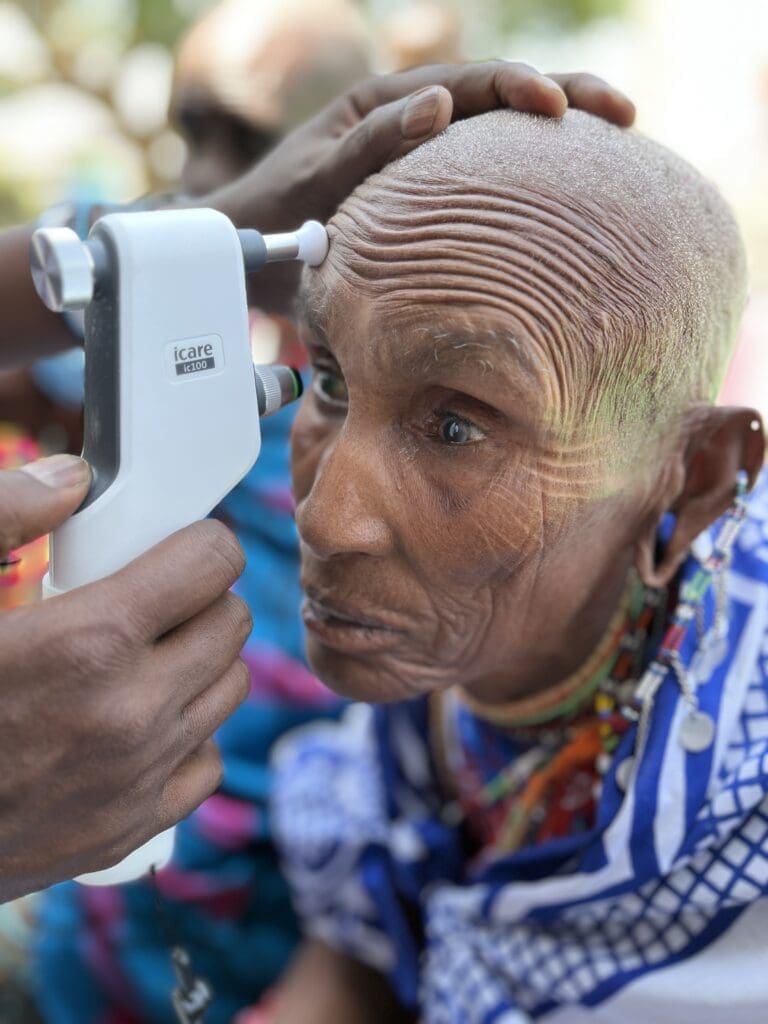
Each day began with providing information about various eye conditions, followed by the start of the screening work. In addition to having their vision checked, the attendees had their blood pressure taken and blood sugar levels measured. Elevated levels of either, whether separately or in combination, can cause serious vision impairment.
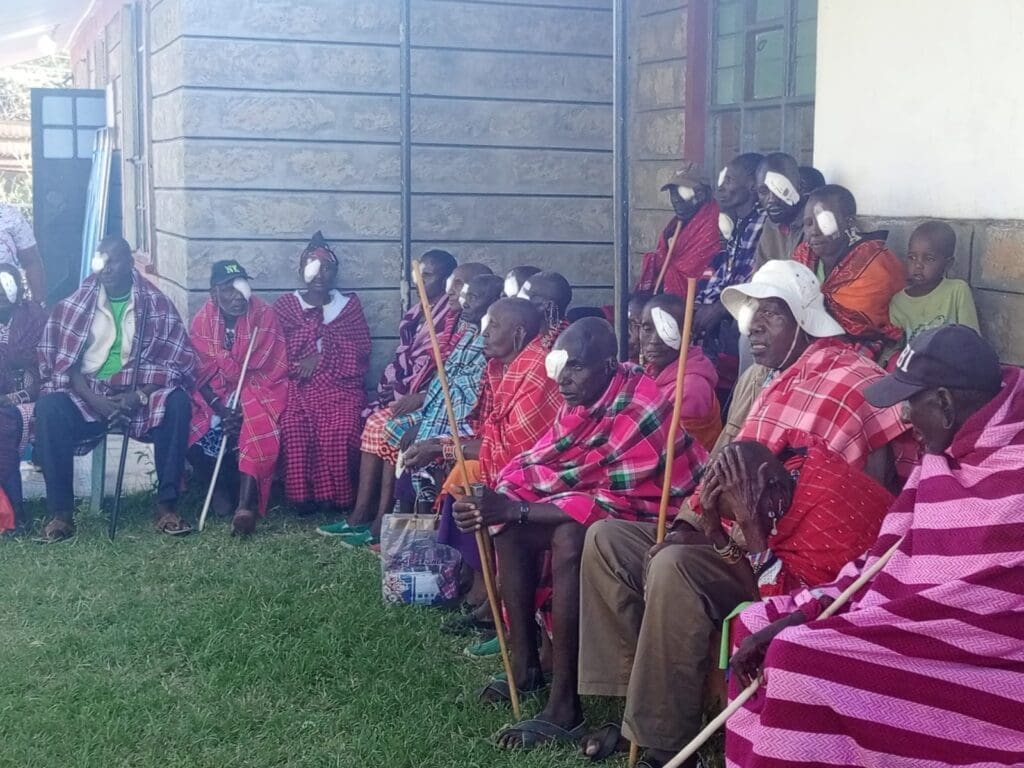
A total of 433 people were examined, and the team found that 274 had eye conditions or eye diseases—a very large proportion (63%). These included 62 cases of cataracts, corneal damage, and refractive errors, as well as 20 cases of trachoma, a serious eye infection that can lead to blindness. Many were treated on-site, receiving antibiotics for eye infections, among other treatments. 95 pairs of glasses were also distributed. This was fewer than expected; many adults could not read and had less need for glasses.
Unfortunately, there were also a number of cases the team could not treat. Among other things, several patients had previously undergone cataract surgery without receiving the necessary post-operative follow-up.
Surgical Camp
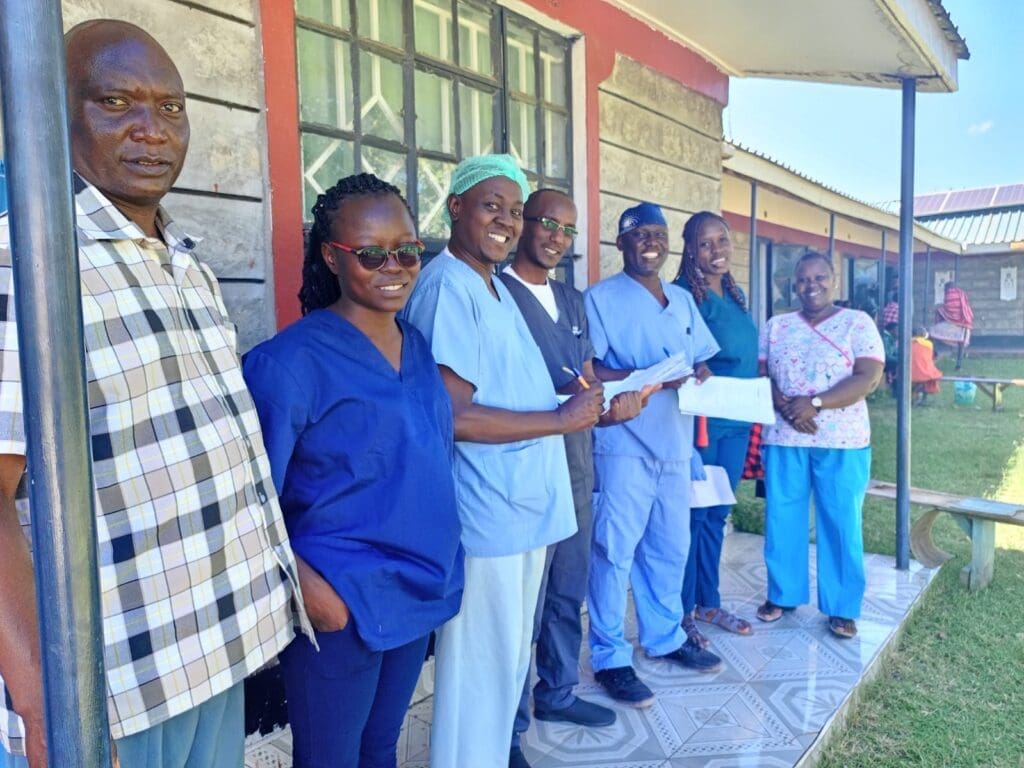
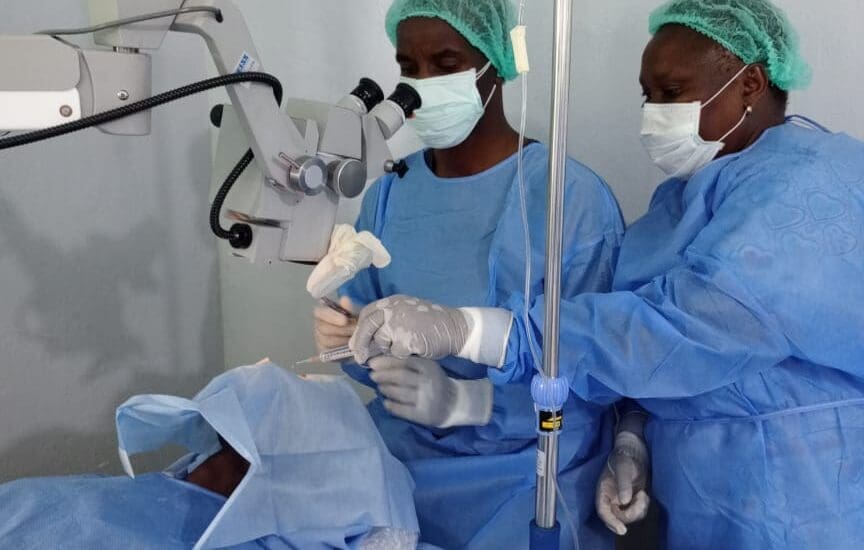
The screening camp was followed up by a surgical camp a month later, staffed by three Ophthalmic Clinical Officers (all cataract surgeons) and three surgical nurses. Of the 62 individuals diagnosed with cataracts during the screening, 38 showed up. That there were dropouts was not surprising; some people are afraid to undergo surgery. We know this from the outreach work we support at the Kwale Eye Centre, Right to Sight’s permanent partner.
Those who underwent surgery received two follow-up checks.
Eye Health in Maasai Mara
Our project was a pilot intended, among other things, to assess the feasibility of establishing a permanent eye health service in the Maasai Mara in collaboration with local partners. The need exists, and the numbers speak for themselves; however, we have concluded that establishing a well-functioning service requires more knowledge about the area and what is needed to succeed.
Instead, we have chosen to support the further education of a local Ophthalmic Clinical Officer who participated in both the screening and surgical camps, and in whom our team developed great confidence. His wish is to continue working in eye health for the local community.